Using scent, sound and touch to open new ways into abstract art.
A design decision, in context
Make the sensory differences tangible.
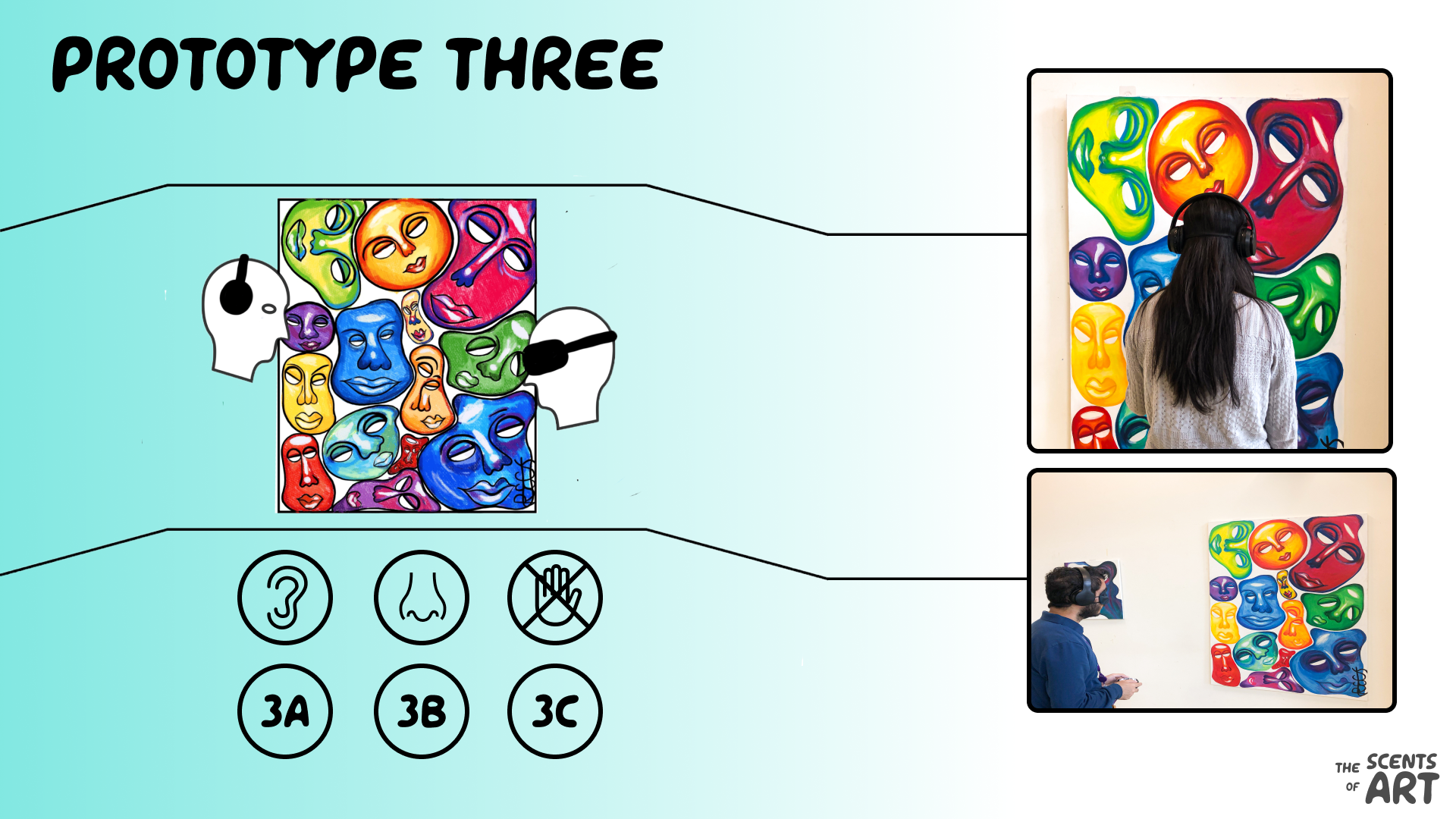
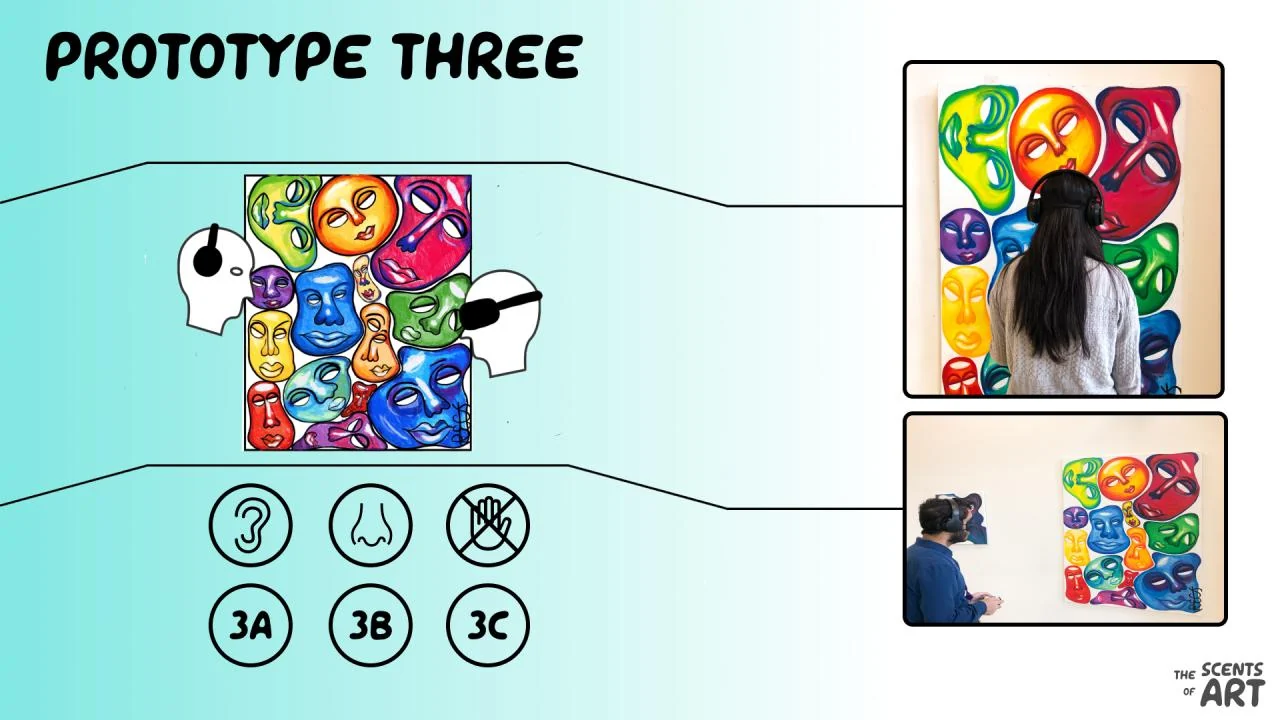
Prototype three: audio description and a trio of scents
What informed it
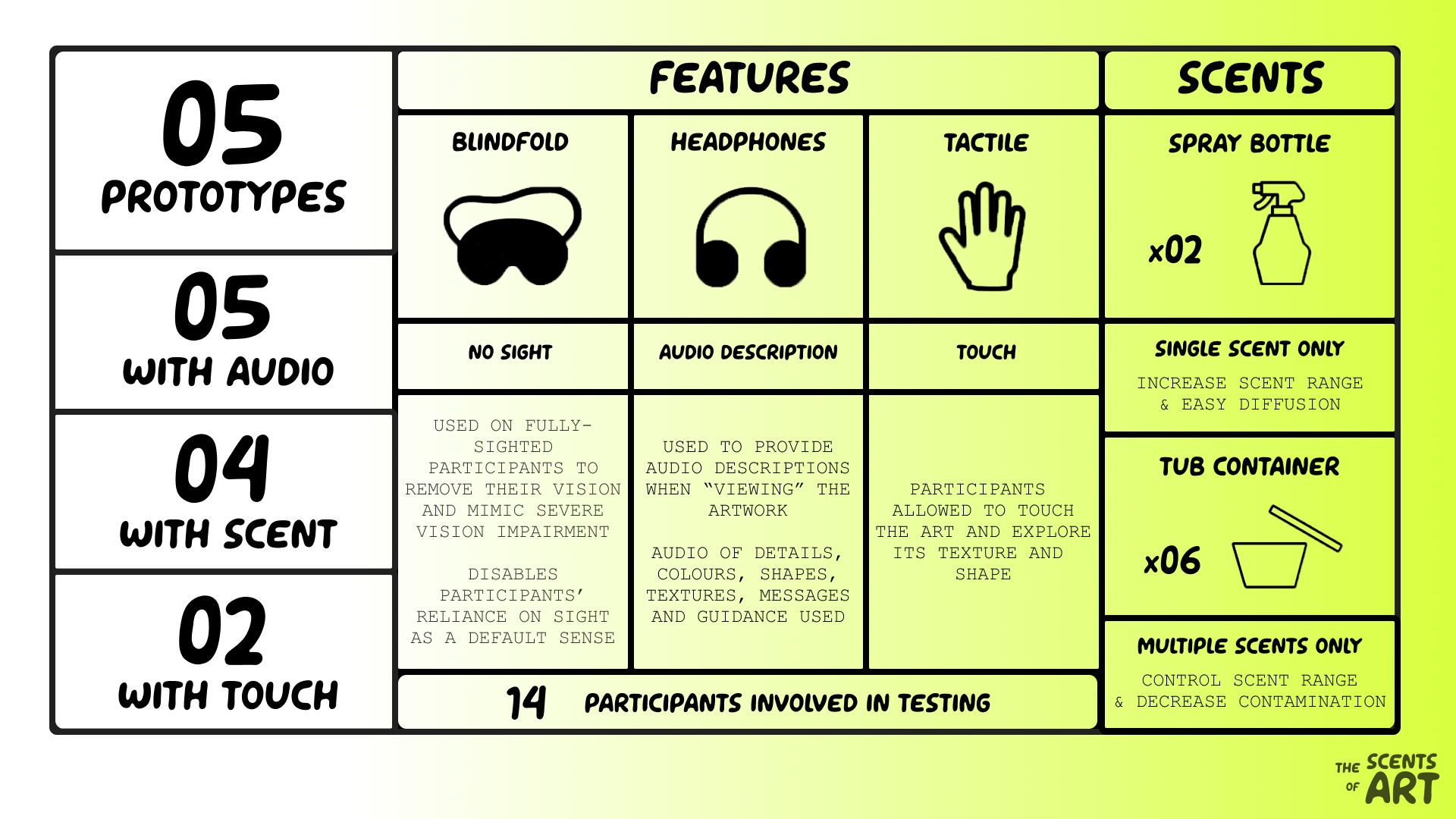
My literature review informed an exploration of scent alongside audio and touch. I translated that direction into five prototypes: all used audio, four added scent and two allowed touch. The documented overview records 14 participants in testing and describes using blindfolds with fully sighted participants.
The design judgement
I varied the number of scents and access to touch, rather than treating multisensory experience as a single feature. Spray bottles supported single-scent presentation; separate tubs were used for multiple scents to control their range and reduce mixing. These choices made different sensory combinations available for exploration.
Project overview.
An independent MSc research and prototyping project motivated by access to art for people with vision impairments. The documented prototype testing involved 14 participants, with blindfolds used on fully sighted participants to remove visual input. This exploratory setting differs from testing with people who have lived experience of sight loss.
Research · Multisensory prototyping · Accessibility
I designed and completed this project independently. Open the image for a larger view.
01 / Research direction
Why explore scent?
My literature-review presentation records 62 sources retrieved and 16 reviewed. It examined multisensory art, accessible art experiences and associations between scent, colour and emotion. The reviewed work highlighted audio and touch approaches, prompting me to explore how scent could contribute alongside them.
I framed three questions: what scent adds to the experience of art, how it can support interaction, and how the number and distribution of scents affect the experience. These were research questions, rather than assumed benefits.
02 / Prototype decisions
Compare combinations, not just objects.
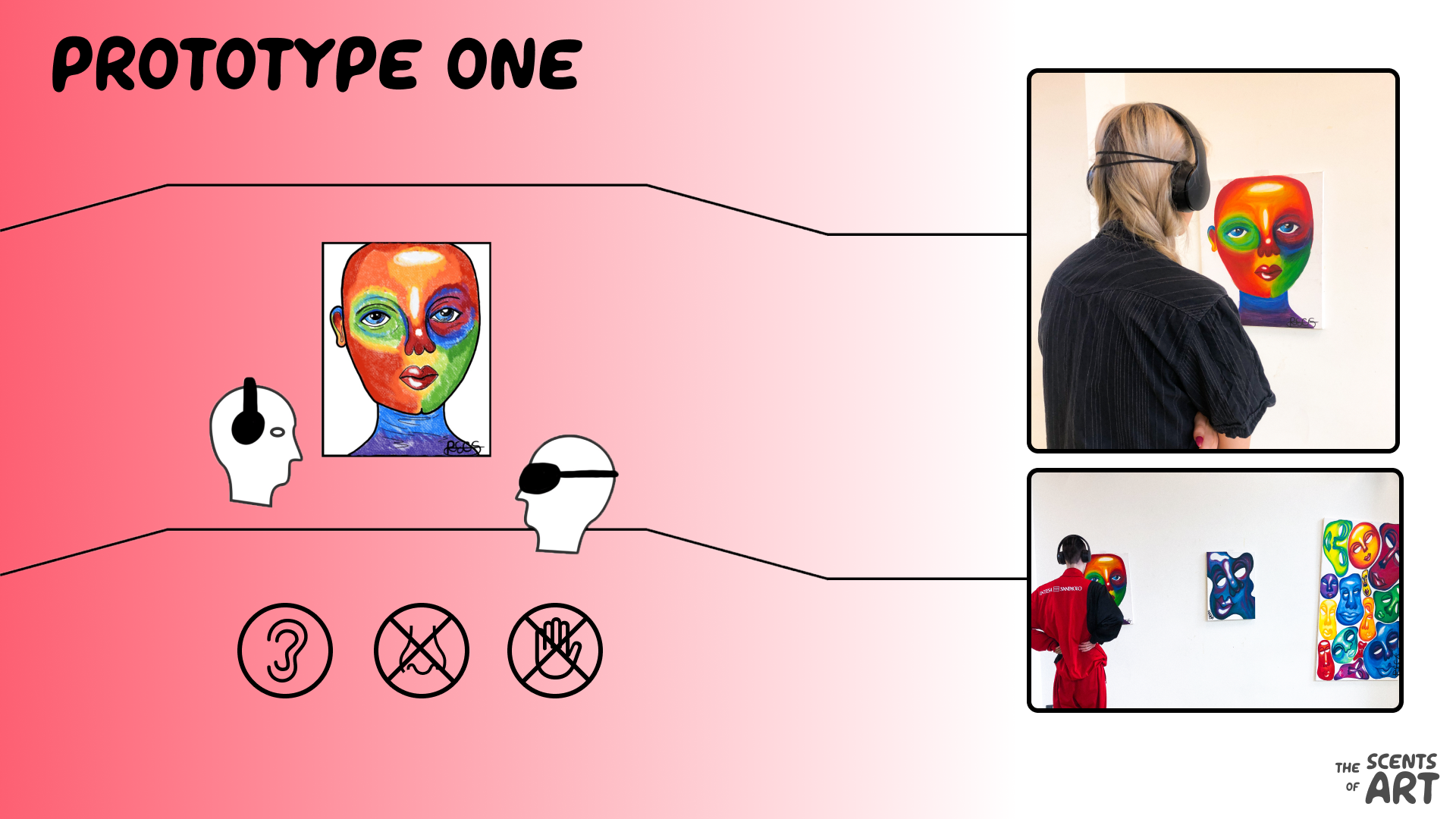
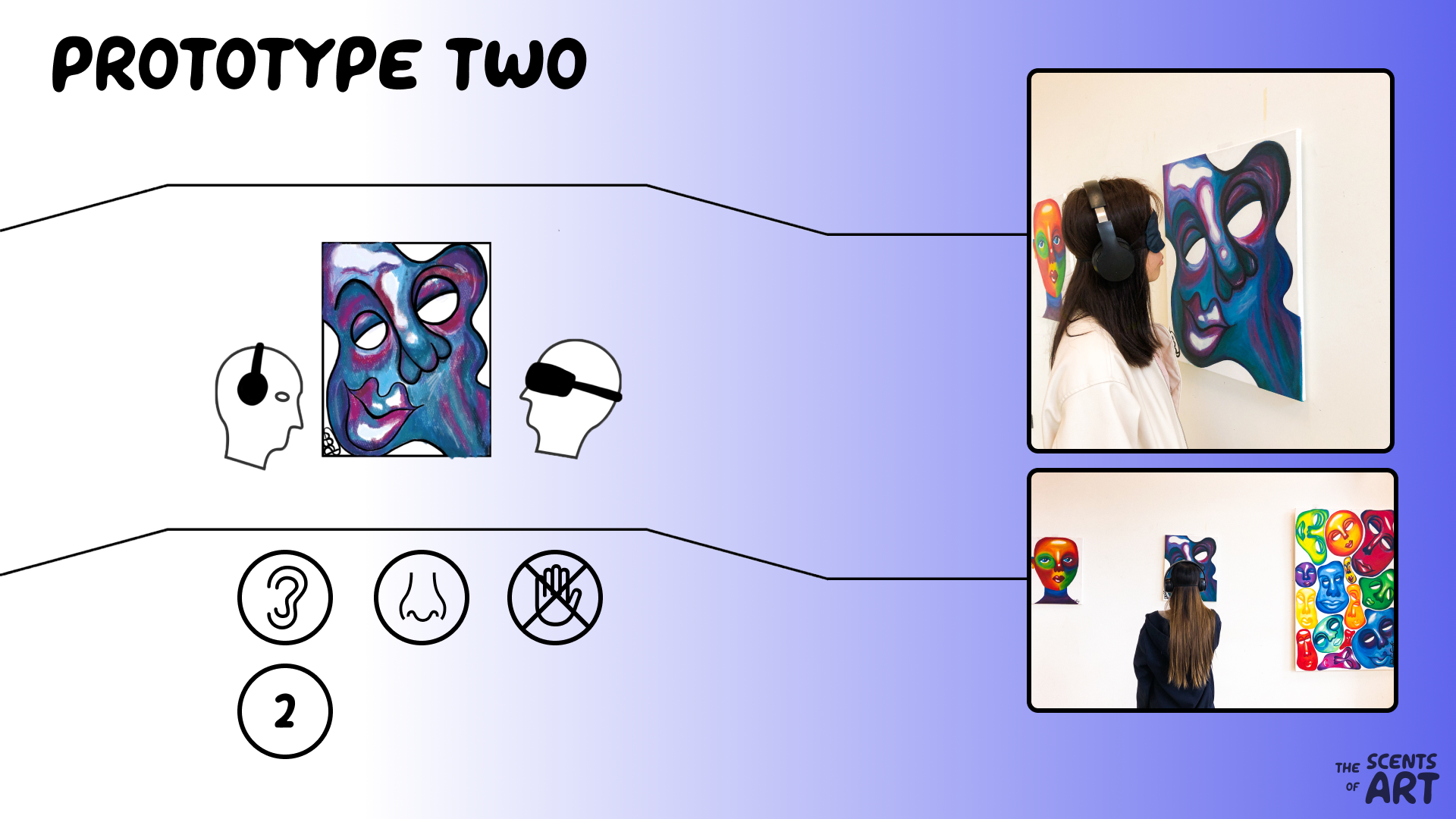
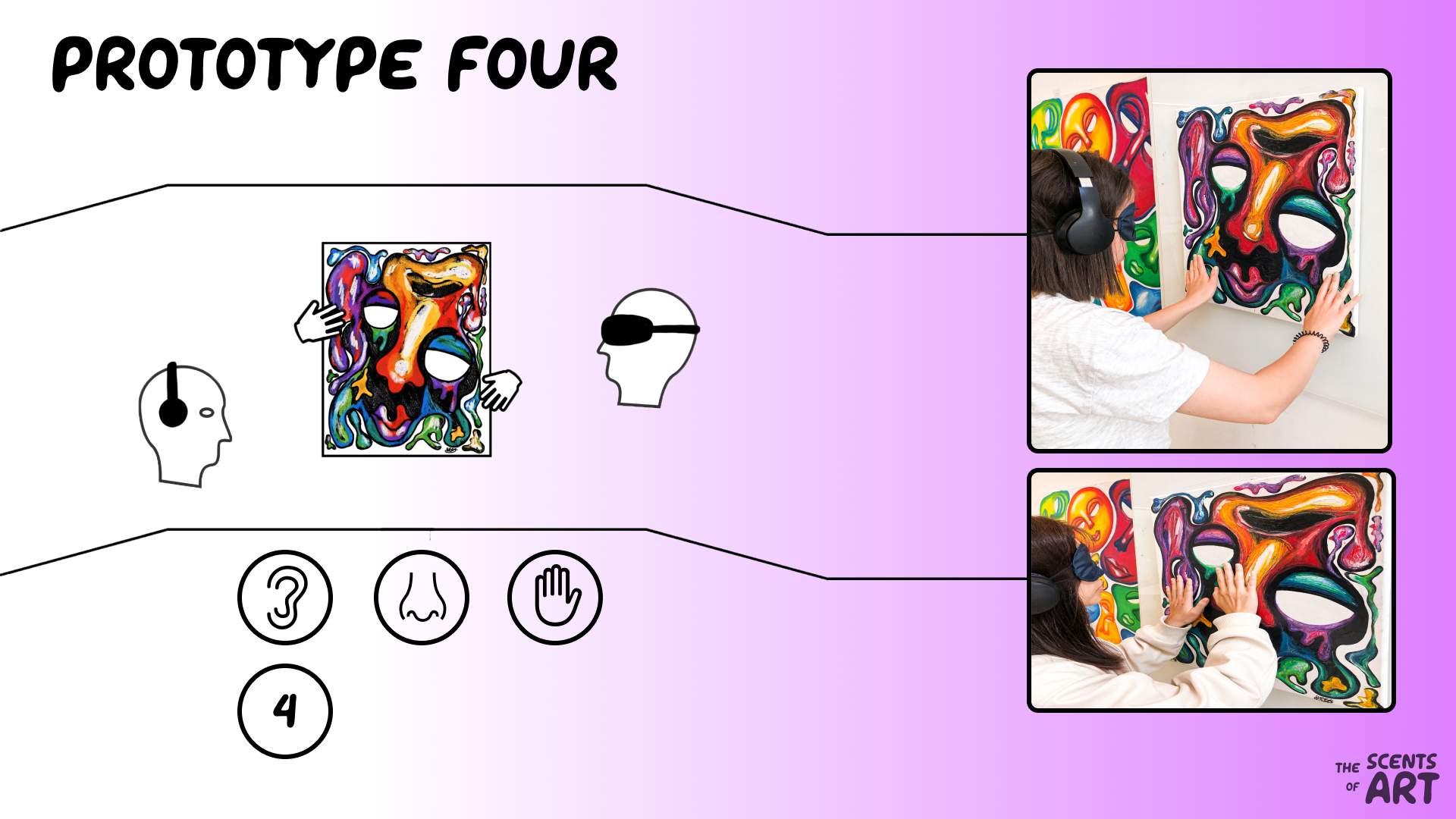
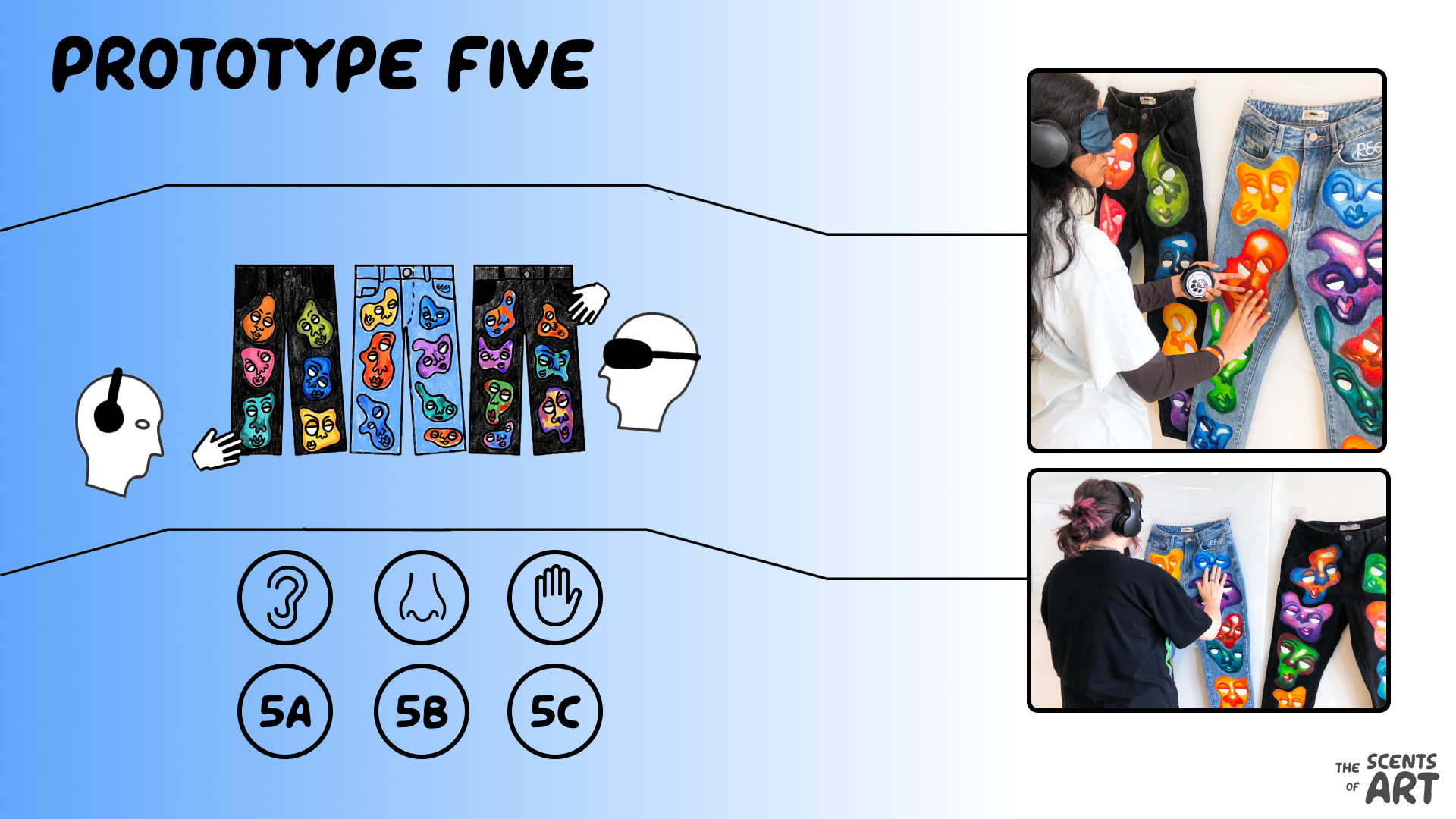
I developed five prototype experiences: audio description alone; audio with one scent; audio with three scents; audio and touch with one scent; and audio and touch with three scents. The tactile prototypes extended exploration to a textured painting and painted clothing.
Audio supplied descriptions and guidance across all five. Two spray bottles presented the single scents, while six tubs separated the multiple scents. The overview explains the trade-off: broader diffusion for a single scent, and more contained presentation to reduce mixing when several scents were used.
03 / Scent design
Translate a visual quality into another sense.
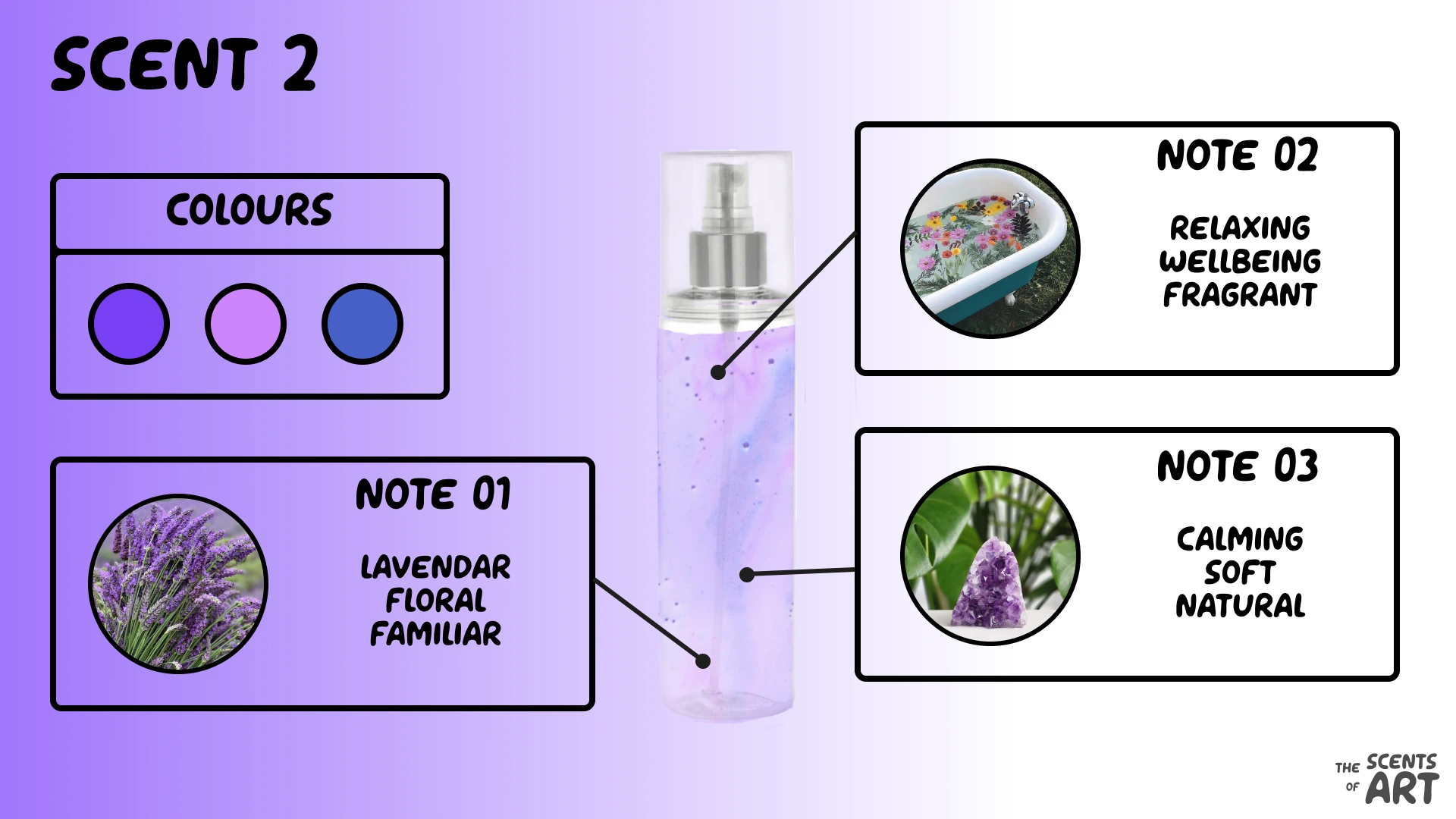
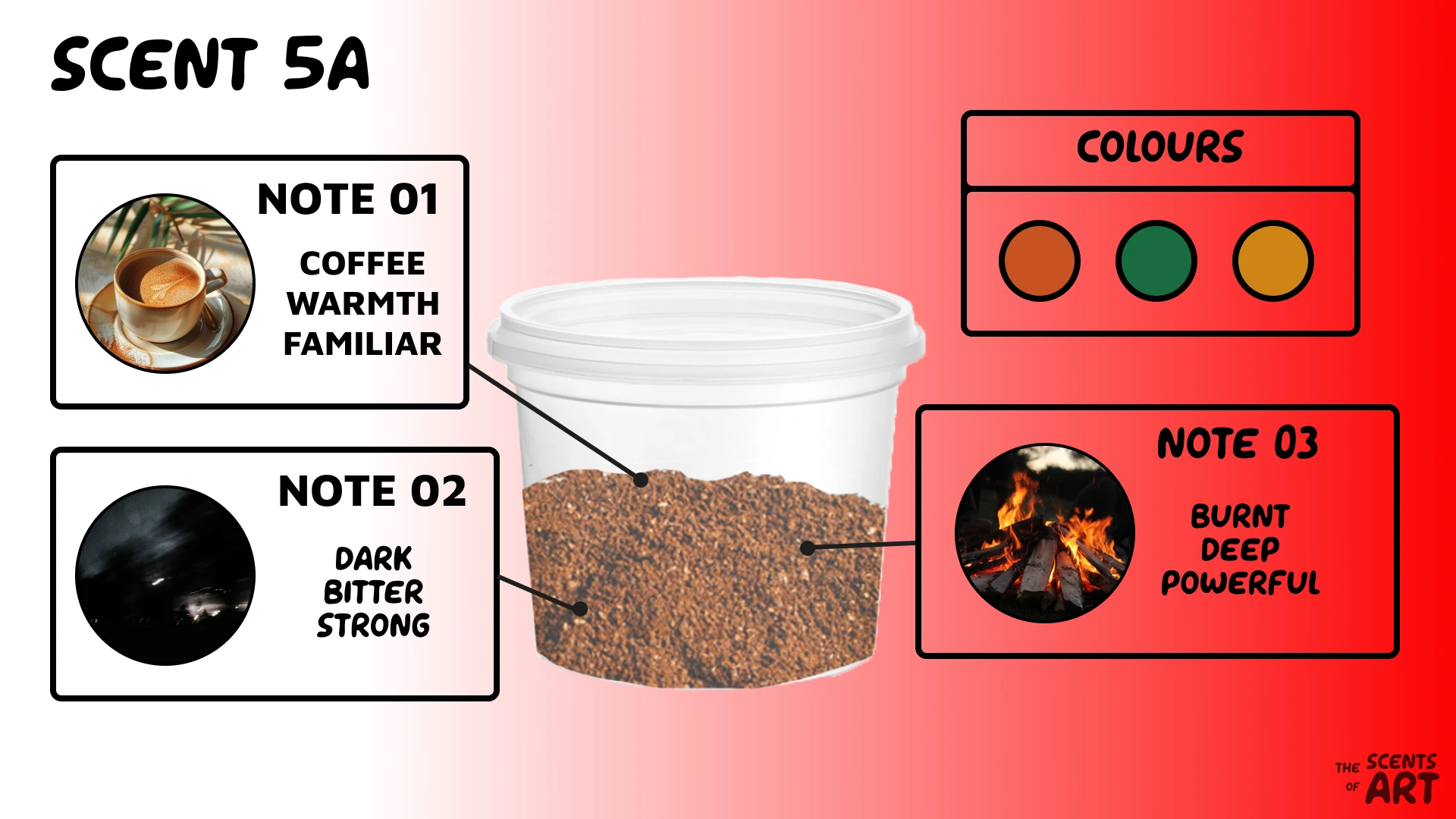
I documented intended associations between scent, colour and mood. Scent 2 pairs lavender with purple and blue tones and calm, familiar qualities; Scent 5A pairs coffee with darker, warm and powerful qualities. These boards communicate the design intent, rather than a universal colour-to-scent code or a measured participant response.
The original research plan proposed interviews before and after testing, observations and thematic analysis. The supplied overview and prototype photographs document the testing setup; they do not provide the final analysis needed to establish which combination worked best.
04 / Scope and reflection
Keep the accessibility claim in proportion.
The five prototypes demonstrate a practical exploration of sound, scent and touch. Blindfolding fully sighted participants removes visual input temporarily, but does not reproduce the lived experience of vision impairment. Different conditions also used different artworks, limiting attribution of any difference to scent or touch alone.
A next step would be to refine the experience with visually impaired participants and compare sensory conditions using the same artwork. That would help distinguish personal associations, artwork effects and interaction preferences.
Open an original project board for a larger view. Prototype boards show the setup; scent boards show intended associations.
Study overview: prototype features and testing scope.Prototype one: audio description only.Prototype two: audio and one scent.Prototype four: audio, touch and one scent.Prototype five: audio, touch and three scents.Scent 2: lavender, colour and intended calming associations.Scent 5A: coffee, colour and intended warm associations.